
If you saw someone wearing a dog-like hood at Pride, at a club, or online, you might be wondering: is that a costume, a mask, a kink thing, an identity thing, or all of the above?
Fair question. A pup hood can look confusing the first time you see one. Depending on the person wearing it, it might look weird, cute, intense, playful, sexy, sporty, cartoonish, or very serious. Sometimes it is several of those things at once.
So, what is a pup hood?
A pup hood is a dog or puppy-inspired hood or mask worn in puppy play. Puppy play is a form of roleplay and self-expression where someone takes on a playful dog-like character, often called their pup side. Some people enjoy it as part of kink. Others experience it as social play, community, relaxation, identity, or simply a fun way to step outside everyday life for a while.
A hood can help someone express that pup side, feel playful, explore a look, or get into pup headspace. Pup headspace simply means the relaxed, playful state some people feel when they stop overthinking and focus on acting more instinctively.
For some pups, the hood is deeply tied to their identity or pupsona, meaning the pup character and personality they have created. For others, it is fun gear for a scene, a pup mosh, a club night, a photo, Pride, or private play. A pup mosh is a social gathering where pups can meet and play, usually with clear rules around consent.
You do not need to be interested in joining puppy play to understand why the gear matters to someone who is. This guide explains what pup hoods are, why people wear them, and what the different styles can mean without assuming you want to become a pup or buy anything.
“A pup hood can support headspace, but it is not a requirement”
In This Article
- What Is a Pup Hood?
- Why Do People Wear Pup Hoods?
- What Does a Pup Hood Look Like?
- Pup Hood vs Pup Mask: Is There a Difference?
- Common Pup Hood Materials
- How Should a Pup Hood Fit?
- Choosing Your First Pup Hood
- A Low-Commitment Way to Try Pup Hood Headspace
- Pup Hood Etiquette and Consent
- Do You Need a Pup Hood to Be a Pup?
- Frequently Asked Questions
- Where to Go Next
What Is a Pup Hood?
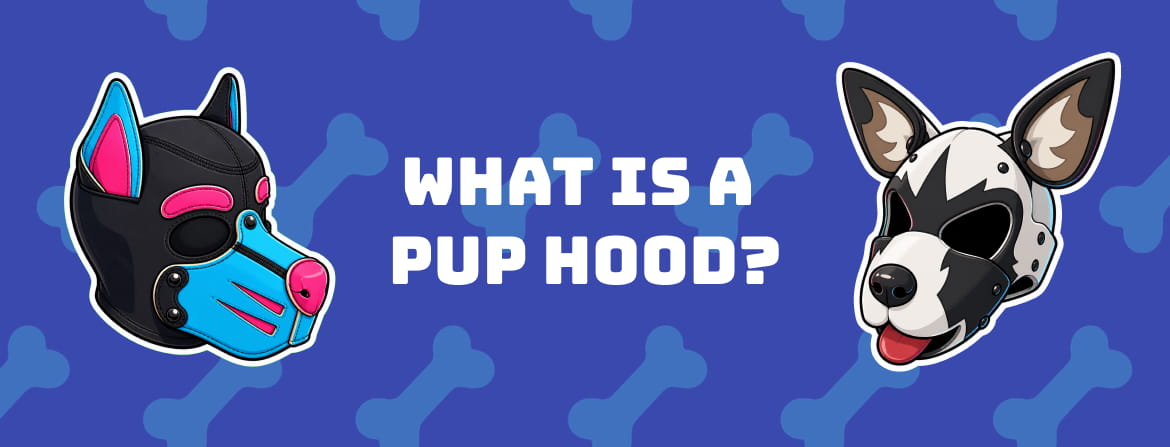
A pup hood, sometimes called a puppy hood, is a head or face covering used in puppy play. It usually has dog or puppy-inspired features like ears, a muzzle shape, eye openings, and some kind of fastening.
The hood can do a few different things:
- Help a person feel more like their pup self
- Make it easier to shift into pup headspace
- Signal playfulness in a mosh or event space
- Express a pup’s style, mood, or personality
- Add a stronger visual feeling to a scene
- Give a sense of confidence or privacy
A pup side is the playful, instinctive, dog-like, or puppy-like part someone may enjoy expressing. For one person, that might mean being bouncy and silly. For another, it might mean being calm, loyal, obedient, bratty, protective, energetic, or soft. There is no single correct pup personality.
Headspace means the mental or emotional shift someone feels when they drop out of everyday human overthinking and into a more playful, relaxed, focused, or instinctive state. Some pups feel this strongly. Some feel it lightly. Some do not use the word at all.
The important bit is this: a pup hood does not mean one fixed thing about the person wearing it.
I’ve been involved in puppy play since 2010, first as a pup and later as a handler, and one thing I’ve noticed over the years is how differently pups relate to their hoods. One pup might treat it like a playful costume piece that comes out for a club night. Another might feel like the hood is the thing that finally lets their human brain quiet down so they can relax and play.
Neither pup is more “real” than the other.
Some people say pup hood. Some say puppy hood. Some say pup mask. The words overlap a lot, and the exact term often depends on the community, maker, region, or just habit. If you are new and use the “wrong” word, please do not stress. Most pups will know what you mean.
Why Do People Wear Pup Hoods?
People wear pup hoods for lots of reasons, and those reasons can change from day to day.
Headspace
For many pups, the hood helps with headspace. It creates a small shift away from everyday life and into something more instinctive, playful, relaxed, or focused.
That does not mean the hood magically transforms you. I wish gear worked that neatly. My gear drawer would be a lot more powerful and a lot less chaotic.
But a hood can help. The pressure, the covered face, the ears, the muzzle shape, or just seeing yourself differently in the mirror can make it easier to stop overthinking.
Puppy play, at its best, creates space to enjoy life. Not to escape life forever. Just to put down the human-brain noise for a while and play.
Self-expression
A hood can say a lot without words.
A bright neoprene hood with floppy ears might feel soft, cheeky, and social. A darker leather hood might feel stricter, sleeker, or more intense. A sporty hood might feel energetic. A cartoonish hood might help someone feel silly and bouncy.
Color, muzzle shape, ear style, material, and coverage all change the feeling.
Some pups also think in terms of a pupsona. A pupsona is the pup personality, look, name, colors, traits, or vibe someone builds around their pup side. It can be very meaningful, or it can be light and playful. You do not need one to be curious about pup play, and you definitely do not need to have it all figured out on day one.
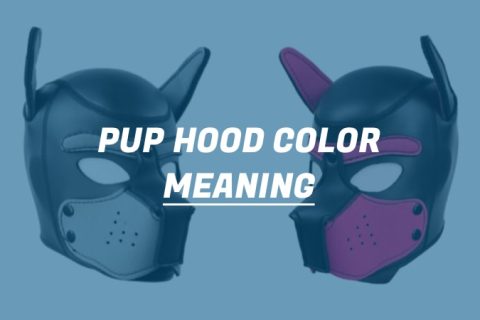
If color and personal design are the part that grabs you, you can read more about pup hood colour meaning or play with ideas in the Custom Pup Hood Designer. That is optional, of course. Sometimes it is just fun to see what combinations feel like you.
Confidence
Some pups feel less self-conscious when part of their face is covered. That can be especially helpful at a first mosh or event, where everything already feels new.
A hood can give a little emotional distance from the awkward voice in your head asking, “Am I doing this right?”
Spoiler: if you are respecting consent and not hurting yourself or anyone else, you are probably doing better than your brain thinks.
Community recognition
At pup moshes, clubs, Pride events, kink socials, and private gatherings, a hood can help someone feel visibly part of the pup community.
That visibility can feel powerful. It can also feel vulnerable at first. Both feelings make sense.
If you are only curious from the outside, this is worth knowing: for many people, the hood is not just there to shock strangers. It can be a way of saying, “These are my people. This is where I feel understood.”
Identity, play, aesthetics, or all three
For some pups, the hood is tied to pup identity. For others, it is mainly a scene accessory. Some just like the look and feel. Some use it in kink. Some use it in non-sexual play. Some do all of the above depending on the day.
Every pup I’ve talked to experiences this differently. The same pup may choose different gear depending on mood, event, and headspace. Personally, that is one of the things I love about pup gear. It is not one fixed costume. It is a toolbox.
And if someone wears a pup hood, that does not tell you whether the moment is sexual, social, playful, identity-based, or private. You only know they are wearing a pup hood. The rest belongs to them unless they choose to share it.
If you try a hood and do not feel instant magical headspace, that does not mean you failed. Sometimes gear clicks immediately. Sometimes it takes time. Sometimes it teaches you that you want a different fit, shape, material, or style.

What Does a Pup Hood Look Like?
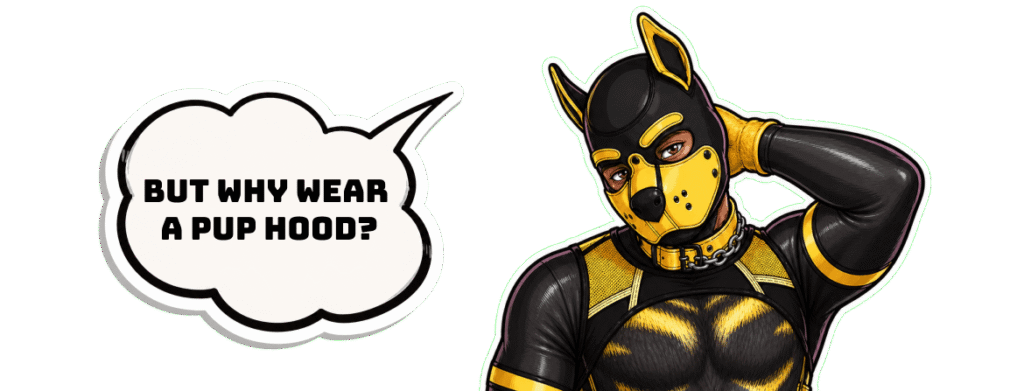
Most pup hoods have a few easy to recognise parts, though not every hood includes all of them.
Ears
Pup hood ears can be floppy, pointed, rounded, perky, removable, or fixed. Ears change the personality of the hood quickly. Floppy ears often read softer or cheekier. Pointed ears can feel sharper or more alert.
No ear style is more beginner or advanced. They just feel different.
Muzzle
The muzzle is the dog-like shape around the mouth and nose area. It may be:
- Open
- Closed
- Soft
- Structured
- Short
- More pronounced
- Flat and minimal
- Designed with a nose detail
An open muzzle can make communication, breathing, and drinking easier. A more structured or covered muzzle can feel more immersive for some pups, but it may also feel warmer or more restrictive.
Eye openings
Some hoods have open eye holes. Others use mesh, cutouts, or different visibility designs.
If you plan to wear your hood at a mosh or club, visibility matters more than people sometimes expect. Looking amazing is lovely. Being able to see the pup zooming sideways into your kneecap is also lovely.
Nose detail
Some hoods have a built-in nose shape. Others use added decorative pieces, stitching, panels, or color contrast to suggest the nose.
Fastening
Depending on the material and design, a pup hood might close with:
- Zips
- Buckles
- Snaps
- Lacing
- Velcro
- Straps
Fastening affects fit, ease of use, and how secure the hood feels. If you are new, simple and adjustable is often your friend.
Coverage
Some hoods cover the full head. Others focus more on the face. Some are open-back or partial designs.
A fuller hood can feel more immersive. A partial hood can feel easier, cooler, and less intense. Again, this is not a ranking. It is about what supports the feeling you want.
Styles range from cute and colorful to dark, sleek, rubbery, leathery, sporty, or cartoon-like. Some hoods are designed for comfort and social wear. Others are built for a stronger visual or scene feeling.
If you want to compare the range after learning the basics, you can browse different pup hood styles and notice what your brain keeps returning to.
Pup Hood vs Pup Mask: Is There a Difference?
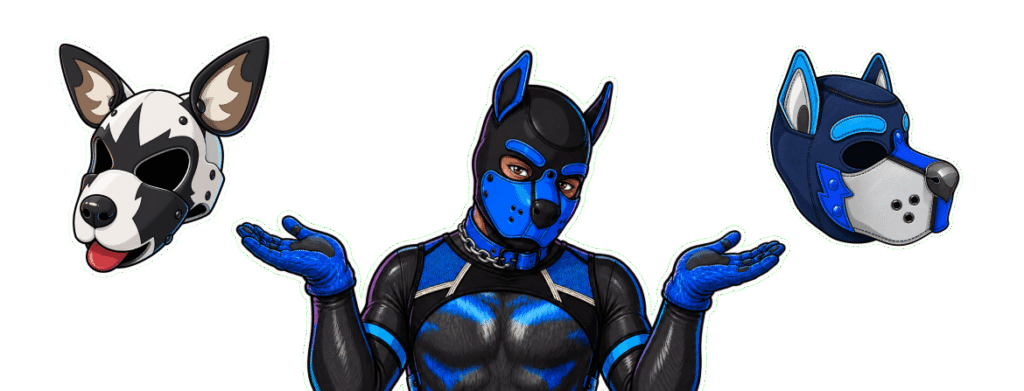
People often use “pup hood,” “puppy hood,” “pup mask,” and “puppy mask” loosely.
In general:
- A pup hood usually suggests more head coverage, often covering the top, sides, or back of the head.
- A pup mask may suggest a more face-focused piece with less coverage.
But this is not a hard rule. Makers, stores, and communities use the words differently.
Through the store, events, email, and social media, I’ve had plenty of beginners ask about “masks” when they clearly meant hoods. That is completely fine. I would much rather someone ask in their own words than sit there feeling like they need a secret pup dictionary before they are allowed to be curious.
When shopping, focus less on the label and more on practical questions:
- How much of the head does it cover?
- How does it close?
- Can I see well enough for where I want to wear it?
- Can I breathe comfortably?
- Is the material something I want against my skin?
- Does it support the feeling I want?
The useful question is not “Is it technically a hood or mask?” The useful question is “What coverage and feeling do I want?”
If you want the deeper version, I’ve written more about the practical difference between a pup hood versus a pup mask.
Common Pup Hood Materials
Material matters because it affects feel, heat, care, price, smell, flexibility, and the overall mood of the hood.
You do not need the most expensive material to have a real pup experience. Please let that sink in for a second. Expensive gear can be beautiful, but it does not make you more valid.
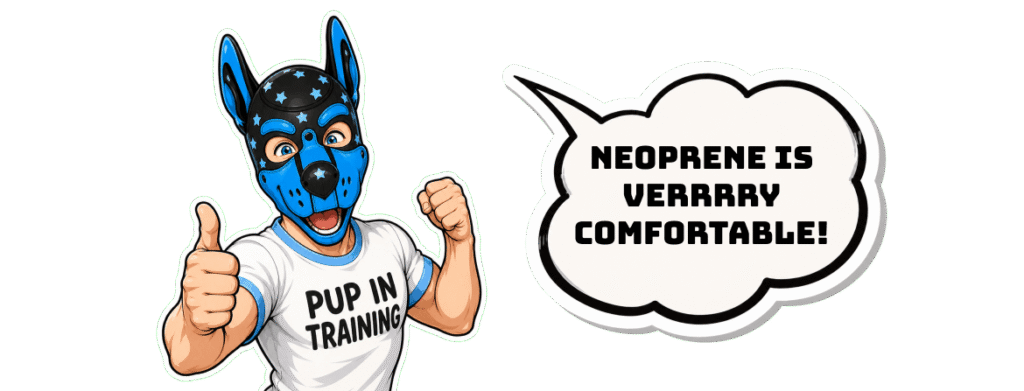
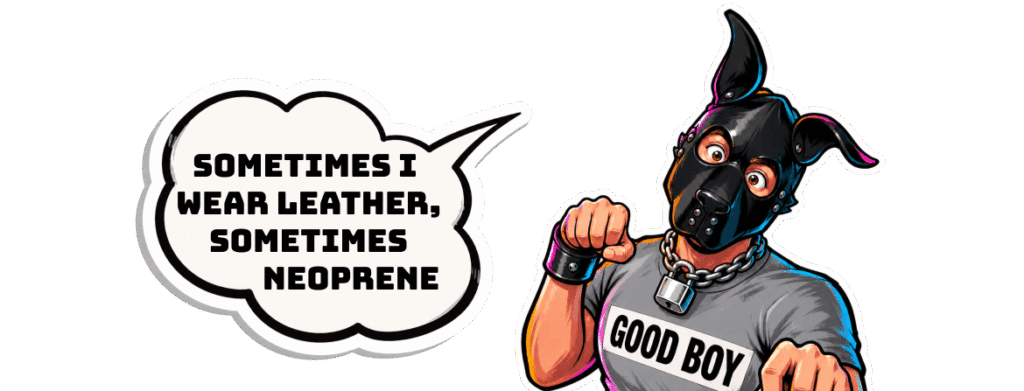
Neoprene pup hoods
Neoprene is often soft, flexible, colorful, and approachable. It is a popular first hood material for good reason.
Many beginners gravitate toward neoprene pup hoods because they tend to feel less intimidating than some heavier or more structured materials. They can be comfortable for social play, moshes, private scenes, and trying out a visual pup identity without jumping straight into something that feels too intense.
Neoprene is also one of the materials I know well through gear use and helping people choose hoods. The thing I like about it for beginners is that it often gives you enough pup feeling without making the whole experience feel overly serious.
Leather pup hoods
Leather often feels more structured, classic, durable, and premium. It can also feel more intense, especially if the hood has a strong muzzle shape or fuller coverage.
Leather needs proper care, and the feel can vary a lot depending on thickness, lining, construction, and fit.
Faux leather pup hoods
Faux leather can give a leather-like look at a different price point or care level. Quality varies, so look closely at stitching, flexibility, lining, and comfort.
Rubber or latex pup hoods
Rubber or latex hoods can have a stronger sensory and fetish look. They may feel tighter, shinier, warmer, and more visually intense.
If latex is involved, be aware of allergy concerns and care needs. Also, heat can build up, so breaks matter. That is not meant to scare you off. It is just the kind of practical thing that makes play better.
Fabric and custom materials
Some hoods use fabric or custom material combinations. These can feel lighter, more costume-like, or more artistic depending on the maker.
When choosing material, ask yourself:
- Do I want soft or structured?
- Do I run warm easily?
- Will I wear it at home, at a club, or at a mosh?
- Do I want easy care?
- Do I want playful, sleek, intense, cute, or something else?
I choose material based on mood, event, and headspace. I do not think of one material as the “correct” pup material. A soft neoprene hood can be perfect for one day. A more structured hood can be perfect for another.
How Should a Pup Hood Fit?
A pup hood should feel secure, but not painful.
That is the short version. The slightly longer version is that a good fit should support your play without making you fight the gear the whole time.
Check these areas:
- Breathing
- Visibility
- Jaw movement
- Communication
- Pressure around the nose
- Pressure around the jaw
- Pressure around the ears
- Pressure on the forehead
- Neck comfort
- Fastenings and straps
A hood should not make breathing difficult. Eye openings should give enough visibility for the setting. If you are wearing it in a busy mosh, you need to see more than you might need to see in a slow private scene.
If your mouth is covered, or if speech is harder, think ahead about communication. That might mean hand signals, a safeword, check-ins, or having a handler or trusted friend nearby.
Heat can build up too, especially in crowded clubs, moshes, or longer scenes. Taking breaks is not failure. It is just good pup maintenance. Like charging your phone, but furrier.
First-time buyers often worry about getting the fit absolutely perfect. I get that. Through the store and events, I’ve helped a lot of people choose gear, and the pattern is familiar: people want to avoid making the “wrong” choice.
The practical goal is simpler:
- Can you breathe comfortably?
- Can you see enough?
- Does it stay on securely?
- Are there painful pressure points?
- Can you communicate what you need?
Sizing varies by maker and material, so measure rather than guessing. If you are between sizes, check the product guidance or ask before ordering if support is available.
If in doubt, choose comfort and safety over the most dramatic look. You can always get more dramatic later. The dramatic hoods are not going extinct.
Choosing Your First Pup Hood
Your first pup hood does not have to define you forever.
One mistake I see beginners make is thinking their first hood has to perfectly capture their entire pup identity for the next ten years. That is a lot to ask from one piece of gear. Your first hood can simply teach you what you like.
Start with where you will wear it.
If you are exploring at home
Choose comfort, adjustability, and a style that makes you curious rather than nervous. You may not need the most intense muzzle or fullest coverage right away.
A softer, more approachable hood can be a great way to learn how head coverage feels without turning your first session into a full engineering project.
If you are going to a mosh
Focus on:
- Visibility
- Breathability
- Secure fit
- Heat management
- Easy removal
- Comfort while moving
Moshes can be active, warm, chaotic, sweet, silly, and occasionally full of pups who forget they have elbows. Choose gear that lets you play safely.
If you want photos, Pride, or event looks
Shape, color, and strong visual identity may matter more. Think about what reads clearly in photos and what feels like you when you see it.
Do you want cute? Sporty? Sleek? Bratty? Soft? Bold? A little intimidating? A little ridiculous in the best way?
If you already have a pupsona or a strong color idea, a custom hood can be a fun option. You can read our custom pup hood guide if you want help thinking through colors, ears, and personal design before making anything permanent.
If you are focused on sensory headspace
Pay close attention to:
- Material feel
- Coverage
- Muzzle style
- Pressure
- Weight
- How much of your face is hidden
Some pups love the feeling of being more covered. Others feel trapped by it. Neither reaction is wrong. It is information.
If you are a handler buying for a pup
Ask the pup what feeling they want.
Do not assume. A handler might love the idea of a strict-looking hood, while the pup wants something soft and silly. Or the other way around. Gear is more meaningful when it supports the pup’s actual headspace, not the handler’s guess.
A simple first hood checklist
Before buying, ask:
- Where will I wear it?
- What feeling do I want?
- What material sounds comfortable?
- Do I want open or more covered muzzle design?
- How much visibility do I need?
- Do I run warm?
- What is my honest budget?
- Do I want something adjustable?
Customization can come later, but it can also be the thing that makes a hood feel unmistakably yours. If you already know the colours, markings, ears, and muzzle shape you want, you can try them in the Custom Pup Hood Designer. If you are still figuring it out, there is no pressure to customize your first hood. Start by learning what feels comfortable on your face and in your headspace.
If you want to compare shapes, materials, and styles after this, the Puppy Hoods category is a good place to start.
A Low-Commitment Way to Try Pup Hood Headspace
Yes, you can explore the idea before buying a hood.
I am very pro-gear, obviously. I own a pup gear store. Subtle plot twist. But I also think endless research can become its own trap. Sometimes a small, safe experiment teaches you more than reading twenty product pages while slowly becoming one with your browser tabs.
Try this privately:
- Pick a quiet, comfortable space where you will not be interrupted.
- Put on something that changes your normal self-image slightly, like a beanie, bandana, simple mask, collar, or hoodie.
- Do not use anything that restricts breathing, blocks vision dangerously, or makes movement unsafe.
- Set a short timer, maybe 10 to 15 minutes.
- Let yourself move, stretch, sit on the floor, play with a toy, or simply notice how it feels to be less “human brain” for a moment.
- Stop if you feel uncomfortable.
- Afterwards, note what you liked or disliked.
Pay attention to the details:
- Did you like having part of your face covered?
- Did you like pressure around your head?
- Did you enjoy feeling less easy to recognise?
- Did you want ears?
- Did you want softness?
- Did you want more structure?
- Did it feel silly?
- Did the silliness help?
This is not a replacement for a real pup hood, but it can teach you what sensations appeal to you.
And if it feels silly, that is fine. Pup play often has silliness in it. That is not a flaw. Honestly, it is one of the best parts.
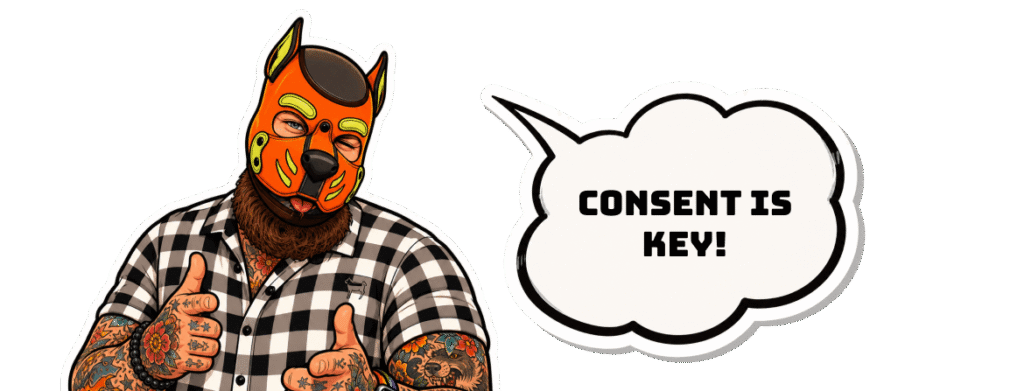
“If you see someone wearing a pup hood, do not touch their hood, ears, muzzle, collar, or body without consent.”
Pup Hood Etiquette and Consent
That includes cute floppy ears. I know. They are tempting. Still ask.
Also, do not assume someone’s:
- Role
- Availability
- Gender
- Sexuality
- Experience level
- Dynamic
- Interest in being approached
- Interest in commands
Do not bark commands at a pup unless you have that kind of consent and connection. A random “sit” from a stranger is not magically okay because someone is wearing gear.
Some pups in hood may be deep in headspace. Some may be chatting normally. Some may be nervous beginners trying to look more confident than they feel. Treat them as people first.
I’ve attended clubs, moshes, community events, and private gatherings in different places over the years, especially around Berlin, Amsterdam, and San Francisco. The details vary, but the consent basics do not. House rules matter. Check-ins matter. Communication matters.
If you are wearing a hood at an event:
- Learn the event rules
- Make sure you can see and breathe comfortably
- Take breaks if you get warm
- Have a way to communicate if speech is harder
- Use safewords or signals if you are in a scene
- Consider having a handler or trusted friend nearby if you are new
Gear can attract attention. That is real.
The reassuring part is that the right spaces, like moshes, queer clubs, Pride events with a kink presence, and kink events with clear rules, usually have people who understand what pup gear is and how to behave around it. You can start small. You do not need to walk into your first event acting like you have been doing this for fifteen years.
You are allowed to be new. You are also allowed to just be curious and never put on a hood yourself.
Do You Need a Pup Hood to Be a Pup?
No. You do not need a pup hood to be a pup.
Gear can help you express the feeling. It can support headspace. It can make you feel cute, bold, obedient, bratty, playful, anonymous, or connected.
But it is not a membership card.
Some pups use only a collar. Some use mitts, tails, harnesses, knee pads, or no gear at all. Some love hoods but only wear them for certain scenes or events. Some are deeply connected to their hood. Some enjoy puppy play perfectly well without one.
I started as a pup before becoming a handler, and from both sides of that dynamic, I really believe this: feeling welcomed matters more than looking impressive.
A hood can be meaningful. It can be beautiful. It can be a powerful part of your pup identity.
It is still not what makes you a pup.
Community, consent, play, curiosity, and self-understanding matter much more.
Where to Go Next
A pup hood is gear that can support headspace, self-expression, confidence, and play. It can help someone feel more connected to their pup side, but it is not required to be a pup.
If you are curious, start by noticing what actually appeals to you:
- Soft or structured material?
- Full coverage or face-focused?
- Open muzzle or more immersive muzzle?
- Cute, sleek, sporty, dark, colorful, or silly?
- Private play, mosh wear, photos, Pride, or events?
You can try the low-commitment headspace experiment first. You can read more beginner guidance. Or you can simply browse and see what your eyes keep coming back to.
If you are ready to compare shapes and materials, take a look through our Puppy Hoods and see what feels like you. No rush. The right first hood is the one that makes you feel curious, comfortable, and ready to play.
Frequently Asked Questions
A puppy hood is another name for a pup hood. It is head or face gear used in puppy play to help someone express their pup side, enter headspace, or enjoy a certain look.
The pup hood meaning depends on the wearer. In general, it means a dog or puppy-inspired hood worn as part of pup play. Personally, it might mean play, identity, confidence, community, kink, comfort, or a mix of those things.
No. Pup hoods can be part of sexual scenes, but they can also be social, playful, identity-based, aesthetic, or connected to non-sexual headspace. Do not assume someone’s intent from their gear.
Pup masks are face or head coverings used in puppy play. Some people use “mask” for designs with less head coverage, while “hood” often means more coverage, but the terms overlap. If you want more detail, this guide on pup hood versus pup mask explains the practical differences.
People wear pup hoods for headspace, self-expression, confidence, community recognition, aesthetics, identity, and play. Different pups experience this differently.
It can be, especially if it fits well, feels comfortable, and matches the kind of play you want. Beginners should focus on breathing, visibility, comfort, secure fit, and easy care.
Usually yes if the event allows it. Check the rules, make sure you can see and breathe comfortably, and take breaks if you get warm or overwhelmed.
Cleaning depends on the material. Neoprene, leather, faux leather, latex, rubber, and fabric all need different care. Check the maker’s instructions before washing or using cleaners, and follow any product-specific guidance. Our pup hood care guide is a good next read if you already own one or are planning to buy.

Leave a comment
You must be logged in to post a comment.